
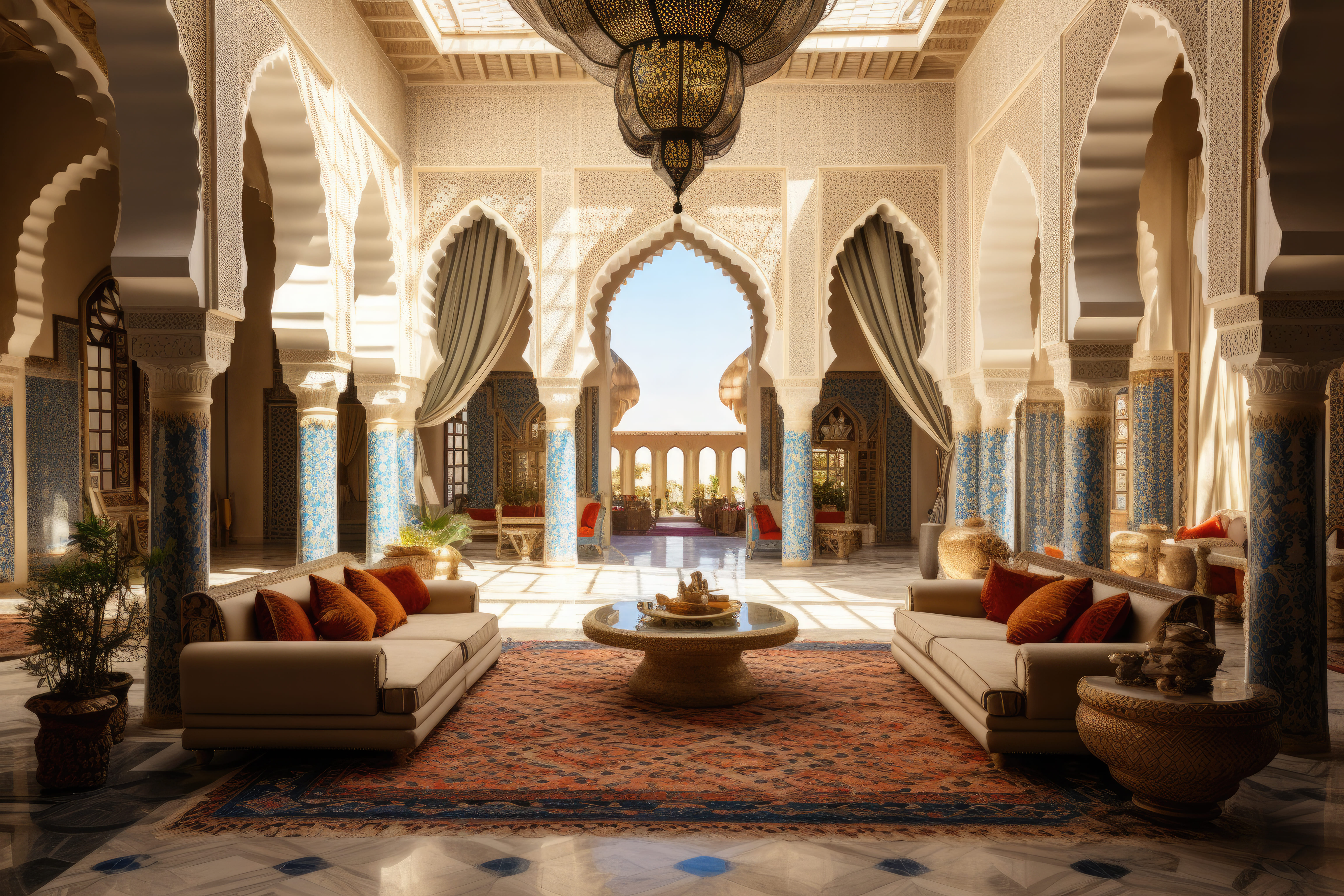
Marrakech has long attracted international buyers looking for a unique mix of cultural richness, strong rental yields, and a rising real estate market. Whether you are buying a riad in the Medina, a villa in the Palmeraie, or an apartment in Hivernage, the buying process for foreign nationals is more accessible than many expect.
This guide covers every step — from property search to receiving your title deed — along with all taxes, fees, and expert practical tips.
Morocco has no restrictions on foreign property ownership. Both EU and non-EU nationals can freely purchase real estate in Marrakech with full legal protection under Moroccan law.
Step-by-Step: The Buying Process
Define Your Budget & Objectives
Clarify whether you are buying for personal use, rental income (short-term or seasonal), or capital appreciation. Each goal will guide you toward different property types and neighborhoods. Factor in acquisition costs of roughly 7–10% on top of the purchase price.
Work With a Licensed Local Agency
A reputable Marrakech real estate agency handles property sourcing, price negotiation, document verification, and notary coordination. At OMNIA BUSINESS, we support international buyers throughout the entire acquisition process.
Property Search & Visits
Visit properties in person wherever possible. If you cannot travel, video walkthroughs can be arranged. Always verify the property's titre foncier — the registered title deed that guarantees clear ownership.
Sign the Pre-Contract (Compromis de Vente)
Once both parties agree on price, a preliminary sale agreement is signed. A deposit — typically 10% of the purchase price — is paid at this stage. This commitment is legally binding for both buyer and seller.
Open a Moroccan Bank Account
Open a compte en dirhams convertibles at a Moroccan bank. Transferring funds through this account proves their foreign origin — a legal requirement to later repatriate capital or rental income.
Notary Due Diligence
The Moroccan notary verifies all documents: title deed, ownership history, absence of mortgages, and urban planning compliance. This typically takes 4 to 8 weeks.
Sign the Final Deed (Acte de Vente)
Both parties sign at the notary's office. The remaining balance is paid and the title deed is transferred to your name, registered at the Conservation Foncière. You now have full legal ownership.
Documents Required
- Valid passport — copy of all pages
- Proof of address in your home country (recent utility bill or bank statement)
- Bank transfer documentation confirming the funds' origin
- Tax identification number (where applicable)
- Power of attorney if unable to attend the signing in person
If you cannot attend the final signing, you can grant a procuration (power of attorney) to your lawyer or a trusted representative. This is common for international buyers and fully accepted under Moroccan law.
Buying Costs & Taxes
| Cost Item | Rate | Notes |
|---|---|---|
| Registration Tax | 4–6% | Applied to the sale price |
| Land Registry Fee | 1.5% | Title transfer — Conservation Foncière |
| Notary Fees | ~1% | Minimum fees apply |
| Stamp Duty | ~0.5% | Administrative charge |
| Agency Commission | 2–3% | Paid to the real estate agency |
| Total Estimated | ~7–10% | Above the agreed sale price |
Property Title Types in Morocco
- Titre Foncier (TF) — The gold standard. Fully registered title at the Conservation Foncière. Guarantees unambiguous ownership.
- Melkia — Traditional document common in the Medina. Valid but requires additional due diligence; converting to TF is strongly advisable.
- Réquisition d'Immatriculation — The property is in the process of being registered. The TF will be issued on completion.
Always verify the titre foncier before signing any agreement. OMNIA BUSINESS verifies all legal documentation before presenting a property to buyers.
Financing Options
- Cash purchase — Most common for international buyers. Fastest process with no lender conditions.
- Moroccan mortgage — Banks such as Attijariwafa, CIH and BCP offer home loans to non-residents, typically financing 50–70% of value.
- International remortgage — Some buyers refinance a property in their home country to fund the Marrakech purchase.
Frequently Asked Questions
Start Your Property Search
At OMNIA BUSINESS, we guide international buyers through every step — property selection, due diligence, notary coordination, and title transfer. Browse our current listings or contact us on WhatsApp to begin.